Picking Drapery Colors That Work With McCordsville Light
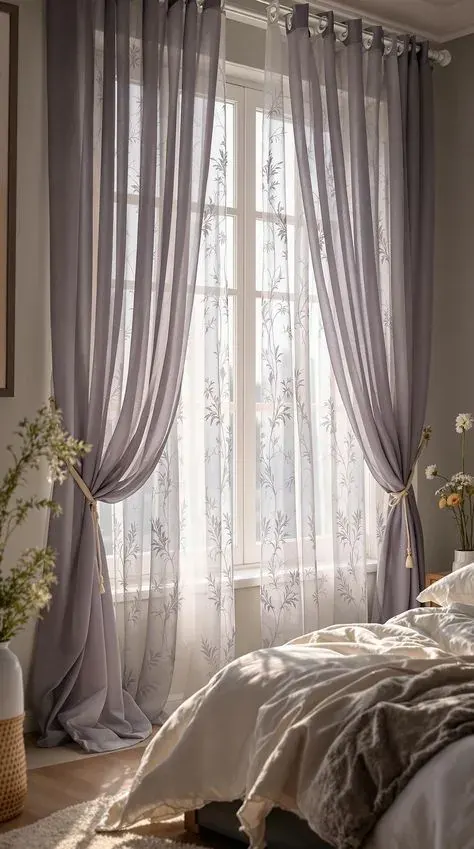
A fabric swatch never tells the whole story. How a material drapes and holds its color only becomes obvious once it is sewn and hanging on a real window, which is exactly why so many McCordsville homeowners end up surprised by a choice that looked perfect on a small square of cloth.
Fabric Weight and How Drapery Falls
Pick up two fabric swatches and you can usually tell which one is going to hang well before it's ever sewn into a panel. A heavier fabric, something like a cotton velvet or a tight jacquard, has enough weight to pull itself straight and fall into deep, even folds. A lightweight linen or a sheer voile moves with the air in the room instead, and it shows every crease from being folded flat on a bolt for weeks before it reaches your window.
Weight also decides what the fabric needs behind it. A heavy panel wants a traverse rod rated for real weight, not a thin spring-tension rod that will bow in the middle within a season. In McCordsville homes with tall windows, that sag shows up fast, since the span is longer and more fabric is pulling down on the rod at once.
If a fabric feels thin in your hand but you love the color, interlining is the fix, a layer of flannel-like material sewn between the face fabric and the lining that adds body without changing how the color looks.
Light Control and Lining Options
A lining mistake we run into constantly: someone orders blackout drapery expecting the room to go fully dark, and it doesn't, because the panels don't extend past the window frame far enough or the rod sits too far from the wall. Light finds every gap. If full room darkening is the actual goal, the return of the panel needs to sit close to the wall on both sides and the rod needs enough height above the frame.
Another one: pairing a thin, cheap lining with an expensive face fabric. The lining is doing real structural work, holding the shape and protecting the face fabric underneath, and skimping on it undercuts the nicer fabric you already paid for. It's a strange place to cut cost.
We've also seen lining chosen by feel in the showroom rather than by testing it against actual daylight. A lining that looks opaque under indoor lighting can still show shadow and some light transfer once it's hung against a bright McCordsville afternoon sky, so ask for a sample held up to a real window if full opacity matters.
Fullness and the Hardware Behind It
Ask what fullness ratio the estimate is actually built on, since "full" gets used loosely and can mean anywhere from one and a half to three times the rod width depending on who's talking. Get the actual number, and compare it against the fabric weight. Heavier fabric generally looks right at a slightly lower fullness than a sheer or lightweight fabric needs.
Ask about the rod's weight rating in pounds, not just its finish or diameter. A rod that looks substantial can still be rated for a fairly light load if it's mostly decorative, and that number matters more than how it looks in a showroom display.
And ask whether center support is included on wide spans, and at what width it kicks in. For a McCordsville window running much past six or seven feet, that's not an optional upgrade, it's what keeps the rod straight and the panels gliding evenly for as long as you own the drapery, so it should be part of the base quote rather than something added after the fact.
Most fabric and color regrets trace back to a decision made without seeing the material in the actual room. Booking a free in-home measure lets you catch weight and lining issues before anything is cut, which is a lot easier than fixing them after.
Color and Sun Exposure
Dark, saturated colors, think navy, hunter green, rust, or a deep charcoal, tend to show two things a lot of people don't expect: dust and fading. Dust shows up as a dull haze on dark fabric that's much more visible than it would be on a mid-tone, and fading on a dark color often shows as an uneven patch rather than an overall lightening, especially where direct sun hits one section of the panel more than another.
Pale, soft colors have the opposite problem. They show soiling at the leading edge and along the bottom hem, where hands and floors touch the fabric, faster than a mid-tone would. Neither issue is really about color itself, it's about how visible normal wear is against that particular shade.
For a McCordsville window with strong afternoon exposure, a mid-tone with some texture in the weave hides both problems better than a flat, dark solid or a very pale one. And regardless of the shade you land on, understand that sun exposure gets slowed with lining and UV-resistant fiber, never stopped outright.
Pattern and Texture
Look at what's already patterned in the room before adding more pattern at the window. A room with a patterned rug and patterned upholstery generally needs a solid or textured drapery, otherwise everything competes for attention and the room feels busy rather than layered. A mostly neutral room, on the other hand, has room for the window to be the pattern statement.
Scale should relate to the size of the window and the room, not just personal preference. A tight, repeating small print can look almost like a solid from across the room, which works well in a smaller McCordsville bedroom where a huge bold pattern would feel like too much. A great room with high ceilings and a big expanse of glass can carry a much larger scale print without it feeling overdone.
Texture is worth leaning on in rooms that already have a lot of hard, smooth surfaces, tile floors and large expanses of glass, for instance. A slubby linen or a nubby weave softens a room like that in a way a flat, smooth solid fabric doesn't.
Frequently Asked Questions
Will lined drapery really stop my curtains from fading?
No, and be skeptical of anyone who tells you otherwise. A good blackout lining or a UV-resistant fiber slows how fast color changes in direct sun, sometimes by years, but nothing on the market keeps fading from happening altogether. A west-facing window is going to show some change over time no matter what lining or fabric you choose, so plan on that rather than expecting a permanent fix.
How much fabric do I actually need for one window?
It depends on fullness ratio and heading style, not just the glass measurement. A pleated panel at standard fullness typically needs two to two and a half times the rod width in fabric, and patterned fabric needs extra yardage to match repeats across seams. A measure appointment is really the only reliable way to get an exact number for a specific window.
Can I use the same fabric in every room for a consistent look?
You can, but it does not always look as good as people expect. Light exposure and room function vary from room to room, so a fabric that is perfect in a formal living room can feel wrong in a sunny breakfast nook. A lot of homes do better with a coordinated palette, same tone family or texture, rather than one identical fabric everywhere.
 DIY Window Measuring: A Straight Answer on the Risk
 Cellular Shades and R-Value: What the Numbers Mean for McCordsville Homes
 Measuring Wood Blinds Right in a McCordsville Home