Measuring Wood Blinds Right in a McCordsville Home
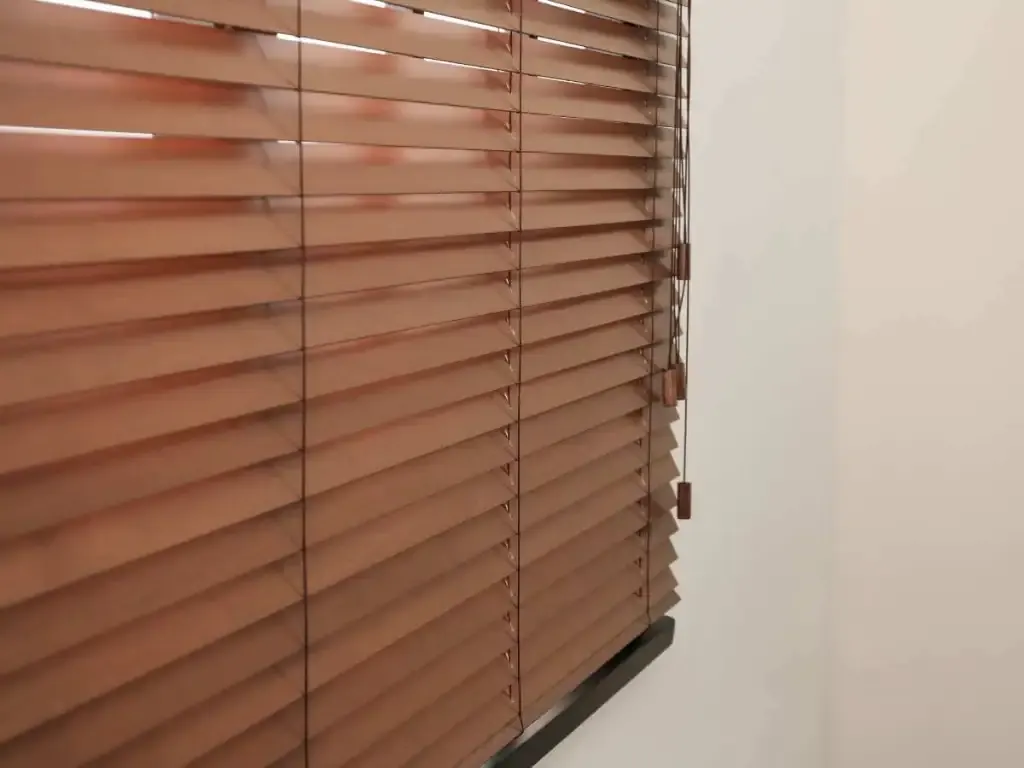
The wood versus faux wood question gets answered badly in most showrooms, usually with a line about budget. Budget isn't the real dividing line. Moisture is, and weight is right behind it. Get those two right and either material will serve a McCordsville house for years. Get them wrong and you end up with slats that won't close flat or a blind so heavy nobody bothers raising it. Here is how the choice actually works.
Real Wood or Faux Wood: How to Choose
Choosing between real wood and faux wood blinds isn't really a style decision, even though it gets treated like one in most showrooms. Basswood, the standard real wood option, is light, straight grained, and takes stain evenly; it weighs about half of what a same sized solid vinyl slat weighs, which becomes a real factor on a wide window. Faux wood splits into two different products under one name: solid PVC, heavy and cheap to start with, and composite, which wraps a wood-polymer blend in a painted finish and lands in between on both weight and cost.
The right pick depends on what the window is exposed to, not on which one photographs better. A dry McCordsville room favors basswood, since wood absorbs and releases moisture and will cup or twist if it doesn't stay dry. A humid room, whether that's a kitchen window over the sink or a bathroom that steams up daily, favors faux wood or composite instead, since neither one moves with humidity the way real wood does.
Weight, Slat Size and Width Limits
Here's what actually breaks on a wide, heavy blind. An unsupported headrail bows in the middle without a center support bracket holding it level, and the tilt mechanism gets stiff under the extra load until it eventually strips, often within a couple of years on a blind used daily. Less dramatically, but just as common, is the habit that follows: the blind gets hard enough to lift that people quietly stop bothering, and it just stays down.
All of that traces back to weight, and weight comes from material and width together. A solid PVC faux wood slat is the heaviest option per square inch. Basswood weighs roughly half as much, and composite falls in between the two. Manufacturers cap faux wood width well below basswood's limit for exactly this reason. Past that limit, the fixes are splitting a wide McCordsville opening into two blinds on one shared headrail, switching to basswood if the room is dry, or motorizing the lift so the weight stops being a daily hassle.
Cost, Lift Choices and What Drives the Price
Once the room decides the material, lift becomes the next real cost decision, and it tracks how the window actually gets used. A stair window or one behind a deep counter is worth motorizing, since reaching a wand or cord isn't practical there; battery motors nationally run roughly $100 to $300 a window less than hardwired versions, with battery upkeep about once a year as the ongoing cost. A window within easy reach does fine on cordless lift, also the safer default in a kids' bedroom or nursery.
Nationally, stock blinds run roughly $60 to $600 a window, reasonable for a garage or laundry room window. Custom blinds, measured and installed in the home, run nationally roughly $250 to $2,600 a window, and the spread tracks material and slat choice as much as it tracks size: a basswood blind with route less slats in a bedroom costs meaningfully more than a composite blind with standard slats in a hallway.
Pick one slat size and one finish for the rooms guests see, give the wet rooms a material built for it, and layer drapery anywhere real darkness matters. That approach keeps a McCordsville house looking deliberate instead of accidental. McCordsville Window Treatments will tell you honestly when wood is the wrong answer for a room. Call (317) 999-5154 to book a measure anywhere in Hancock County, IN.
Where Wood Blinds Fit Best Room by Room
Room fit changes what a wood blind is actually worth to you, which matters when you're deciding where to spend. In a living or dining room, basswood earns its higher price, since the room stays dry and the slat is on display as part of the trim every day. Spending up on real wood over a kitchen sink, by contrast, is one of the more common ways people waste money in this category, because that window will cup a slat within a couple of seasons regardless of quality.
Kitchens and bathrooms are better served by faux wood or composite, which cost less than premium basswood anyway and hold up to steam and splash without complaint. Bedrooms are where a smaller upgrade pays off: route less slats, which remove the ladder holes from the face of each slat, cost more than standard routed slats but solve the column of light dots that shows up at night against a streetlight. In a McCordsville hallway nobody sleeps in, that upcharge isn't worth paying.
Measuring, Mounting and Finishing Details
A 2 inch blind headrail wants roughly two to two and a half inches of flat depth for a clean, flush inside mount. Measure width and height in three places each, then check the opening for square, since older McCordsville houses rarely give you a perfectly square one, and a blind cut to the wrong number will rub on one side and hang crooked. A factory deduction, usually about a half inch off the width, gets taken so the blind can tilt without binding, and that deduction is exactly why an inside mount always shows a little light at the edges.
On a door, add hold down brackets and check that the blind clears the handle before ordering. Valance choice affects the finished look more than people expect: a standard valance matches the slats and sits flat, while a decorative or crown valance is shaped and reads more formal. On an outside mount, insist on returns, the short pieces that wrap back to the wall, so you aren't looking at the bare end of the headrail from the side.
Frequently Asked Questions
How wide can a single wood blind be?
It depends on material more than anything. Basswood weighs roughly half what solid vinyl weighs, so real wood can span wider before the headrail bows and the tilt gets stiff. Faux wood caps out sooner. Past the limit, the usual fix is two blinds on one continuous headrail with a shared valance, which keeps the top line unbroken while each half tilts and lifts on its own. Motorizing is the other answer on very heavy units.
Which slat size should I choose?
Two inch is the default and it suits most windows. Larger slats mean fewer of them, so there is more open glass when tilted, but they stack deeper when raised and they need more room to rotate in a shallow inside mount. On a small bath or kitchen window, a 1 inch slat often looks right where a wider one looks heavy. Check your mounting depth before committing to the biggest slat available.
How much mounting depth does a wood blind need?
A standard 2 inch headrail needs roughly two to two and a half inches of flat depth behind the trim for a flush inside mount. Less than that and the headrail sits proud of the frame instead of tucking in flush. Shallow trim usually points toward an outside mount instead, which covers more wall but skips the depth requirement entirely. We check depth at the measure along with width and height, and confirm the opening is square, since all of it together decides how the blind actually fits.
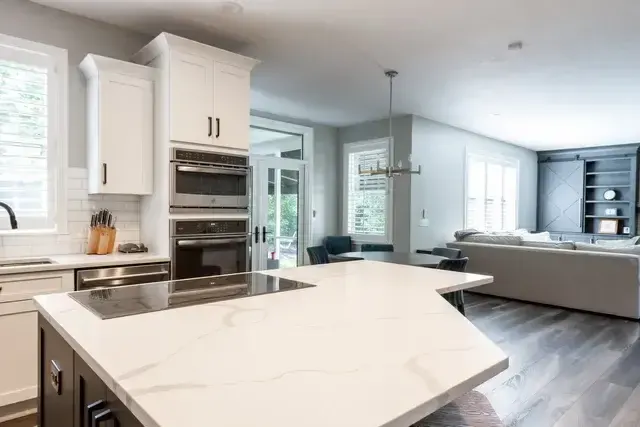 DIY Window Measuring: A Straight Answer on the Risk
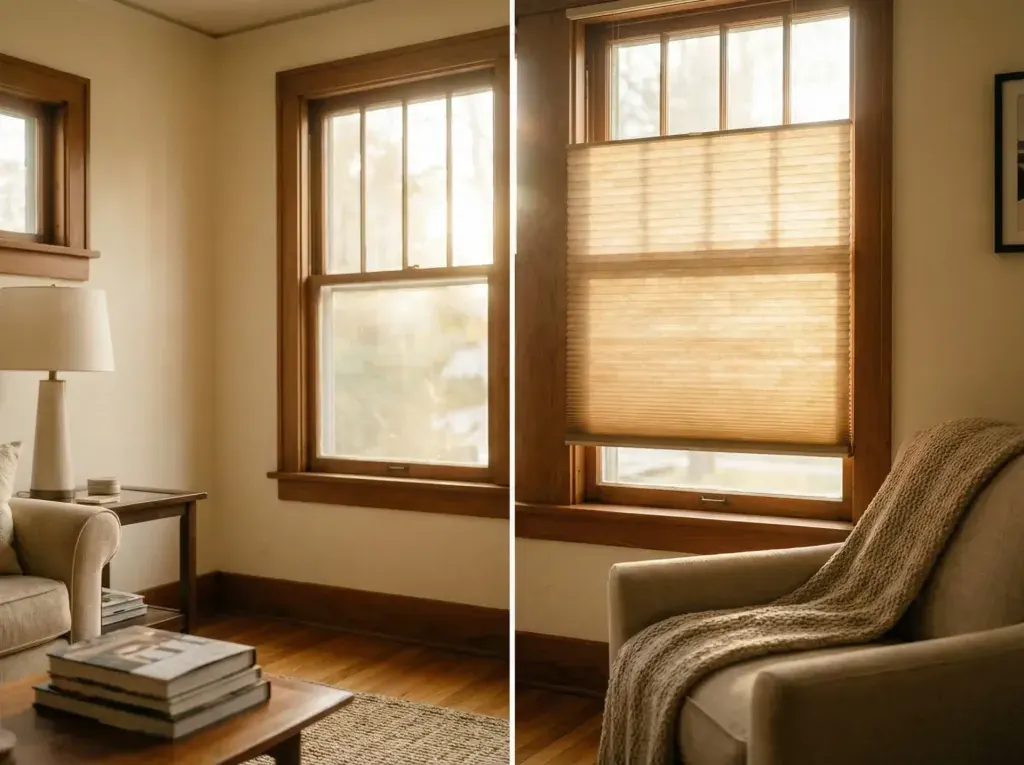 Cellular Shades and R-Value: What the Numbers Mean for McCordsville Homes
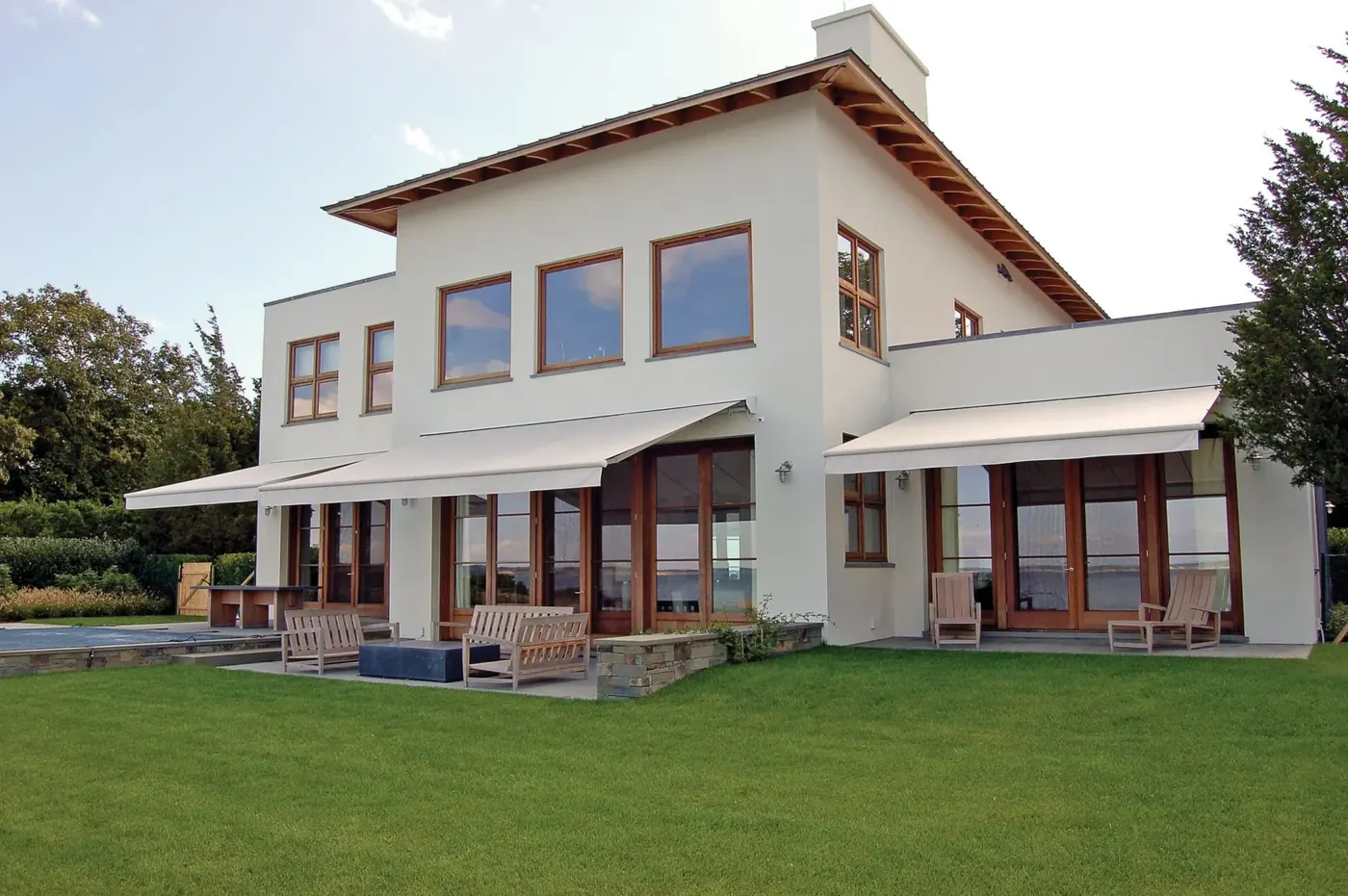 Retractable Awning Mistakes McCordsville Homeowners Make