A McCordsville Buyer's Checklist for Cellular Shades
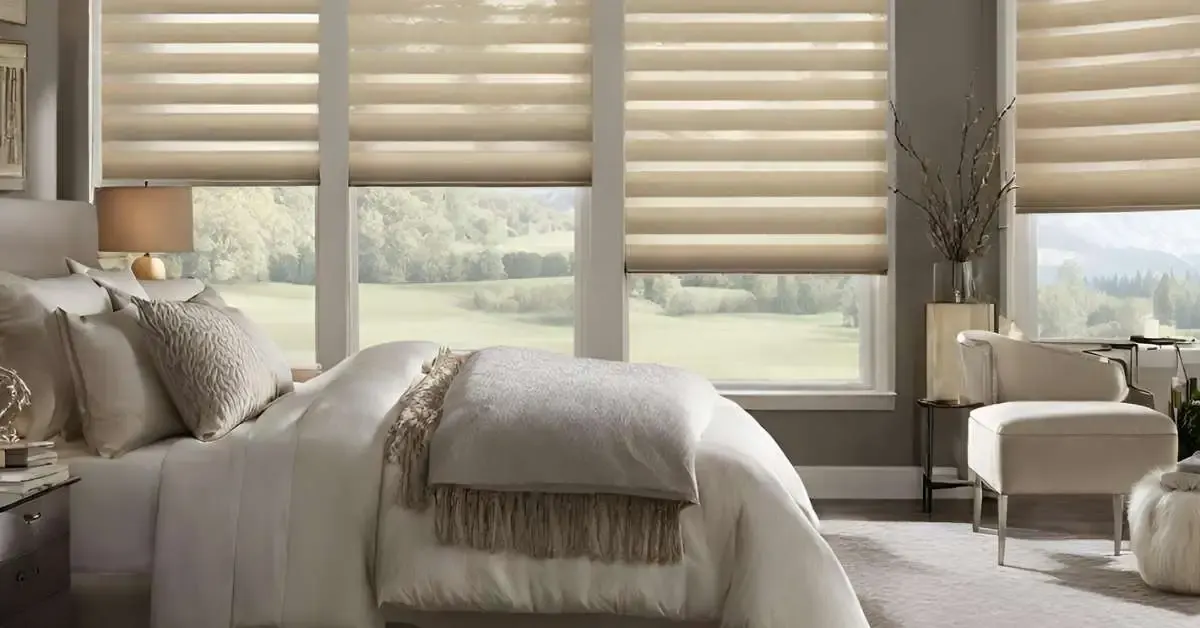
The same cellular shade can be right in one room and wrong in the next one down the hall. A bedroom needs darkness and a kitchen needs daylight. A west facing great room needs the cells working hard while a north facing office mostly needs glare control off a screen. Here is how to think about it window by window in a McCordsville home.
What the Cells Actually Do
Walk a McCordsville house from room to room and the same honeycomb mechanism is doing different amounts of work in each one. A cellular shade is pleated fabric folded into rows of hollow tubes, and each tube traps a column of still air against the glass. That trapped air slows heat moving through the window in both directions, which matters most in the rooms that take direct sun.
A west facing great room that cooks every afternoon is asking the cell structure to do real work. A north facing office that never gets direct sun is not, and it is really asking for something else entirely, usually glare control on a screen rather than heat management at the glass.
Knowing which job a room actually needs is the first decision, before cell count, cell size, opacity, or how the shade lifts ever comes up.
How the Shade Operates
People assume a shade that starts creeping down on its own is broken. Usually it is not. A cordless shade uses a spring in the headrail to hold the fabric's weight, and that spring relaxes gradually over years of use. The fix is a tension adjustment inside the headrail, not a new shade.
The racking mistake happens constantly and gets blamed on the hardware. Lifting a cordless shade by one corner instead of the center throws it out of level, and it will run crooked until someone pulls it even again. That is user error, not a defect.
The motorization mistake is choosing battery power because it costs less up front, roughly $100 to $300 a window less than hardwired based on national figures, without asking about the batteries themselves. A wand commonly needs fresh batteries something like once a year, which turns into a real annual chore on a house full of motorized shades, especially the ones up high that need a ladder.
Opacity and the Light Gap
Opacity is a separate cost line from cell count, and it is where budgets get surprised. Light filtering fabric costs less and gives daytime privacy without darkness. Room darkening fabric adds an opaque liner inside the cell, and it costs more, but by itself it does not deliver a genuinely dark room, since light leaks in around the edges of an inside mounted shade rather than through the fabric.
The real fix for that edge gap is side channels or an outside mount with real overlap, and both add to the price beyond the fabric upgrade itself. A drapery panel layered over the shade is a cheaper version of the same fix, using fabric you may already be budgeting for elsewhere in the room.
Know this before you order room darkening for a nursery or a bedroom expecting full darkness. The fabric upgrade alone will not get you there, and the actual fix has its own line item.
What Cellular Shades Cost
Get a written quote naming cell size, single or double, opacity, operation, and mount type for every window, not a single number for the whole house. Stock cellular shades run roughly $60 to $600 a window nationally, and custom shades measured and installed run roughly $250 to $2,600 a window based on national ranges.
- Lead time confirmed in writing, typically two to five weeks for custom fabrication.
- Battery cost discussed upfront if anything is being motorized.
- Fabric name and color code recorded if you plan to add windows later.
- A written price for each window, not just a single total for the house.
IN issues no license for this trade, so do not use that as your filter. Confirm instead that the contract meets the Indiana Home Improvement Contract Act, which requires a written scope and a firm total price for residential work over one hundred fifty dollars, before you sign anything.
Go room by room and the choices get easy: darkness where people sleep, daylight where you want it, double cell on the walls that cook, and something simple everywhere else. McCordsville Window Treatments walks the house with you and notes what each McCordsville opening actually needs, then puts the plan in writing. Call (317) 999-5154 and we will start with the room that bothers you most.
Single Cell or Double Cell
A single cell shade has one row of tubes. A double cell has two rows front to back, which puts two air pockets in series between the room and the glass instead of one. Double cell slows heat movement more. It also costs more and sits thicker front to back, and once raised it stacks taller at the top of the window.
Cell size is a separate spec from cell count. Common sizes run 3/8 inch, 1/2 inch, 9/16 inch, and 3/4 inch. Smaller cells look finer and stack tighter, which suits a small opening. Larger cells cover a tall window with fewer pleats. A 3/4 inch cell on a short window can look coarse, and a 3/8 inch cell on a tall stairwell window can look like corduroy.
Double cell earns its price on the openings that actually work hard: a west facing wall taking afternoon sun, a bonus room over a garage, a corner of a McCordsville house that never quite feels comfortable, or a run of glass wide enough to matter. On an interior hallway window or a small bath, single cell does the same visual job for less money.
Frequently Asked Questions
Do cellular shades help in summer or only in winter?
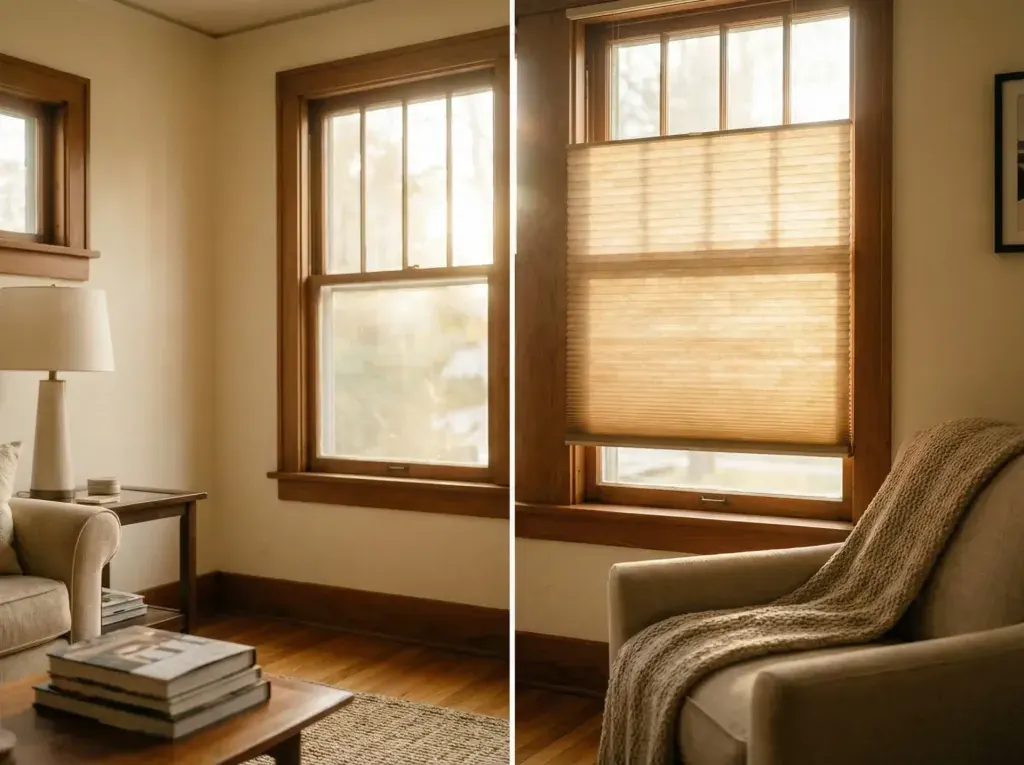
Both, and that matters in this climate, since there's a real cooling load in summer and a real heating load in winter here. In summer, the trapped air inside the cells slows heat radiating off hot glass into the room. In winter, it slows warm room air from giving up its heat to cold glass. Manufacturers publish an R-value for cellular fabric, similar to what's used for wall insulation, and it rises when you move from single cell to double cell. Treat that number as a fair way to compare two shades against each other, not a guaranteed number on your utility bill.
How do you clean honeycomb shades?
Gently and regularly. The cells trap dust, so the routine job is a vacuum with a brush attachment on the lowest suction, run along the pleats rather than across them. Spot clean marks with a barely damp cloth and let the shade dry fully open. Don't soak a cellular shade or run it through anything, since water breaks down the bonds holding the cells together, and a collapsed cell doesn't come back. Kitchen shades need this more often than the rest of the house.
Do I need a different cell size for a small window versus a large one?
It helps to scale it. A 3/4 inch cell on a small bathroom window can look coarse and out of proportion, like a piece of hardware rather than a fitted shade. A 3/8 inch cell on a tall stairwell window turns into dozens of tight pleats that read busy from across the room. The 9/16 inch size is the workhorse that looks right on almost anything in between, which is why it shows up on so many orders. If you're doing several windows in the same room, matching the cell size keeps them looking related rather than random.
 DIY Window Measuring: A Straight Answer on the Risk
 Cellular Shades and R-Value: What the Numbers Mean for McCordsville Homes
 Measuring Wood Blinds Right in a McCordsville Home